One August morning in Ibiza, I stood in front of a pile of tomatoes at an organic farmers' market. Proper tomatoes, ripened in the sun, slightly imperfect, smelling like tomatoes are supposed to smell. Next to them were figs just picked from the tree, peaches, herbs, home-baked bread, olive oil. Not a huge choice, but more than enough to inspire a week of cooking. All seasonal and local. Nothing fortified, activated, protein-enhanced, biohacked or designed to improve my cognitive performance artificially.
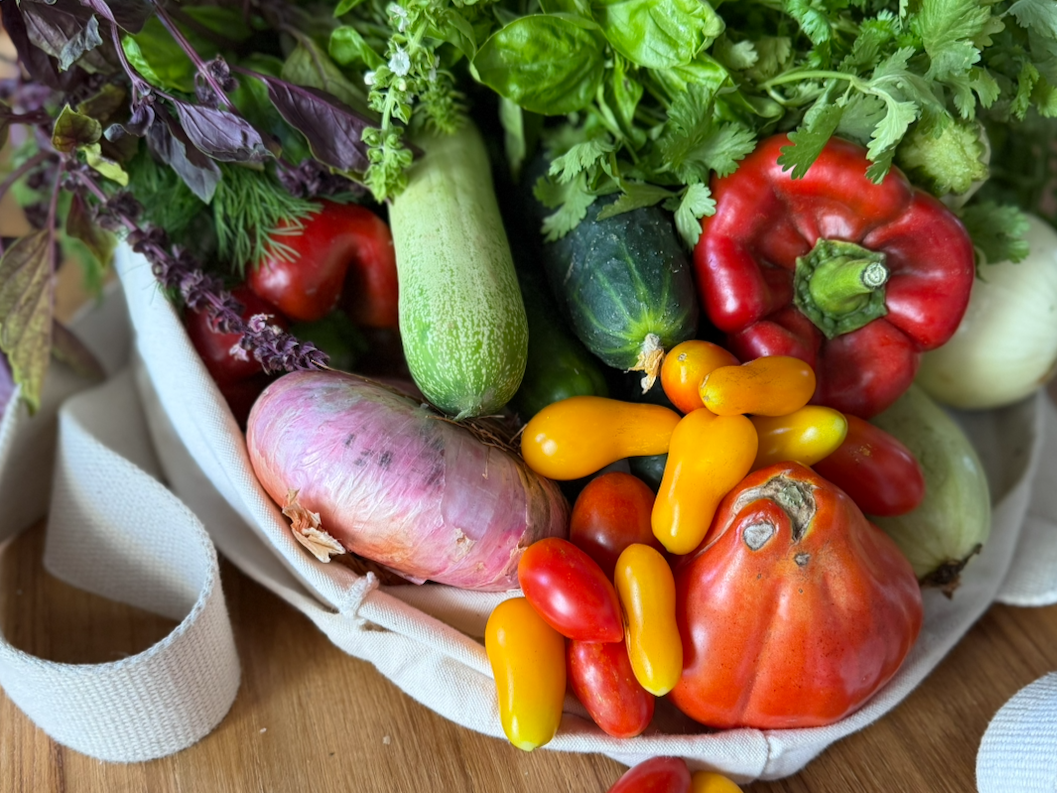
I remember thinking: perhaps this is enough.
Not just the tomatoes. Everything.
Somewhere along the way we entered an age of too much. Too many products, platforms, experts, supplements, festivals, mentors, movements, methods, communities, solutions and so on. Whatever corner of life you enter, somebody has already packaged it, branded it, monetised it and created a masterclass explaining how you can do the same, again and again.
Even the things that were supposed to help us escape the madness are becoming part of the madness. Wellness now sells ever more sophisticated solutions for lives that are making us unwell. Spirituality has celebrities and premium packages. Sustainability has become another shopping category. We have apps to remind us to breathe, supplements to help us sleep, products to give us energy, products to calm us down, and food designed to save us the inconvenience of preparing food.
We then work harder to afford all of it.
We did not consciously choose this way of living. Most of us were born into it, educated into it and sold the idea that this was progress: work more, achieve more, consume more, then keep yourself functioning well enough to continue.
It is only when something interrupts the cycle - exhaustion, illness, a major life change, or simply an awakening to how absurd it has become - that you suddenly see it from the outside.
You no longer want to be only a consumer of the system's solutions, and you do not want to be another producer feeding the same machine either. You start looking for a different way of living altogether.
We eat quick, convenient food because we are busy, then look for ways to fix our digestion and skin. We outsource cooking to save time, and with it we give away the whole sensory ritual of planning, choosing ingredients and preparing food - processes that naturally slow us down, focus us and bring us back into our bodies. Then we pay separately for mindfulness and nervous-system practices to recover some of what we removed from daily life in the first place.
But how much further can this go?
We cannot become infinitely more productive. Products cannot keep becoming more sophisticated and expensive while promising to repair what our way of living keeps undoing.
Perhaps the question is not how to cope better with this life, but whether this is the life we should be trying so hard to cope with at all.
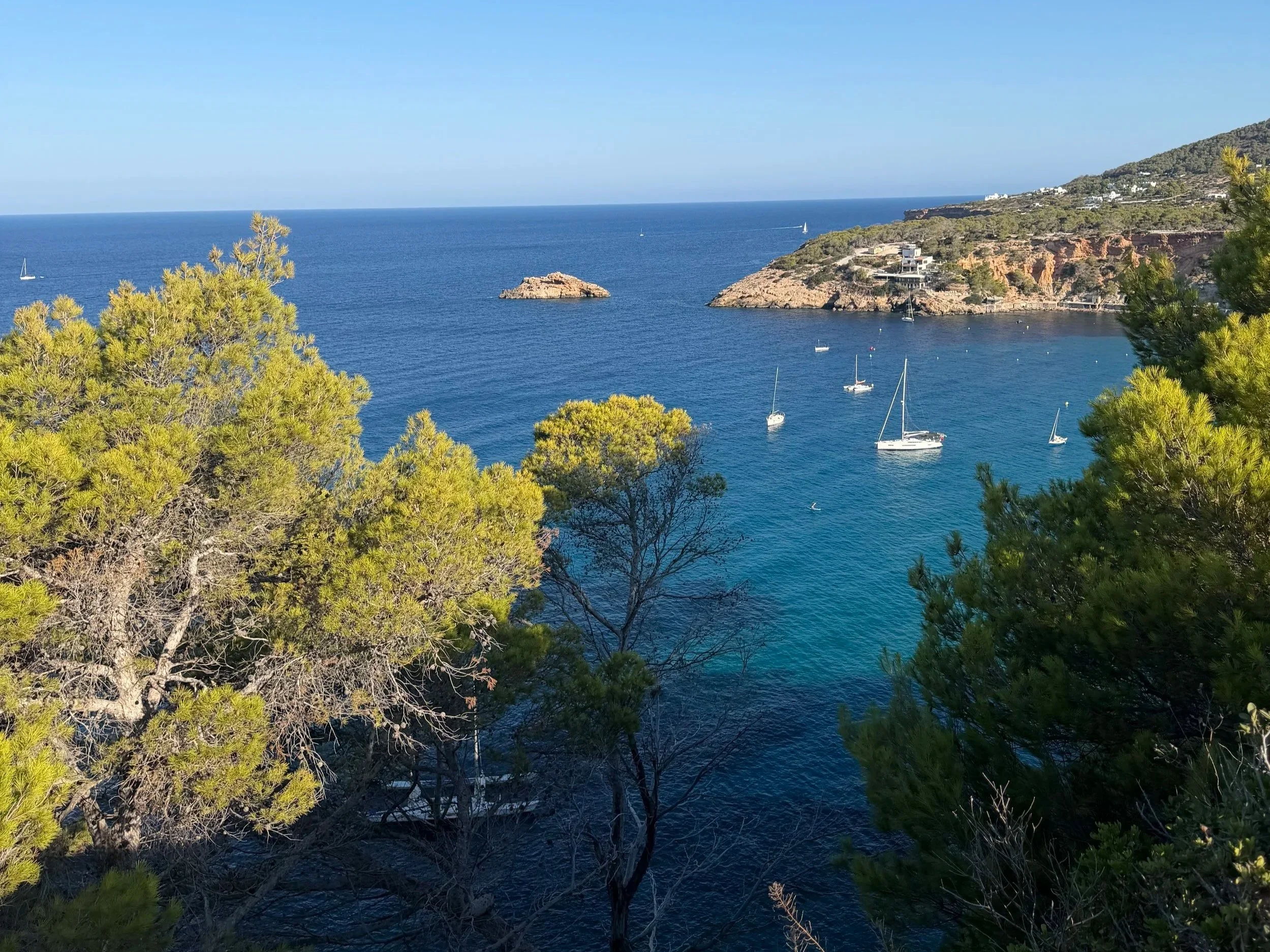
August made that very clear to me. For few quiet weeks alone in Ibiza, I organised my days around my needs, very basic things. I chose food that felt good for my body, went to local growers and the market, cooked for myself three times a day and actually sat down to eat it.
Swam in the sea every morning, I was outside every day, with the sunlight and Unger the stars. Didn’t skip my yoga, journaling and read without doing other things at the same time - not listening to Audible while driving, as we do, because there is no time to read a physical book any more!
For the first time in many years, these things were not squeezed into whatever space remained after everything "important" had been done. They were important.
The effect on my nervous system, energy and clarity was enormous. With no complicated protocols, or extraordinary treatments, no magic products - everything very basic.
Simple life, real food, movement, nature, rest, water and sunlight, no rush, creativity and time to think, attention to the body, thoughts and spirit.
Very basic human things.
And yes, I can already hear the obvious question: Love, who has time to live like that? How are the most of us supposed to afford it?
I know this sounds like a privilege. In many ways, it was. But it wasn’t a planned wellness escape I had the time or money for; it was an unexpected pause that arrived through very ordinary circumstances, at a moment when I badly needed one.
I don't completely know the answer yet. But maybe the question itself tells us something.
How have the foundations of a healthy human life become a luxury, while everything designed to compensate for their absence has become normal?
We talk endlessly about sustainability, but a life that continually consumes the person living it is not sustainable either.
Maybe simplicity deserves much more attention. Not simplicity as an aesthetic, another expensive lifestyle or a beautifully curated version of "slow living", but something more fundamental: a life where food, movement, rest, nature, relationships, creativity, contribution and earning are not constantly competing for our time and energy. A life that feels whole.
We cannot change everything around us at once, but we can occasionally step outside its rhythm.
Even a few days away from the usual demands, screens and constant input can create space to notice what our body has been trying to tell us, what we are tired of carrying, and what we might actually want instead.
August proved once again that real pauses are essential in modern life.
The sea, the food, the silence and the slower days did not hand me some grand answer. They cleared enough noise for me to hear myself again. And sometimes that is the beginning - first the space, then the clarity, and eventually perhaps a different choice.
We need more of these pauses. Not as another wellness treatment squeezed into an already impossible life, but as a conscious step out of it, long enough to remember what being well actually feels like.
And the pause does not have to be Ibiza. It can begin with one meal - ingredients chosen with care, cooked slowly, and eaten sitting down, with nothing else demanding your attention and without feeling guilty for taking the time.
And from there, perhaps, we begin to see what is enough.
With love,
Elena x
voice@elenademinska.com
